The Most Underrated Display Format: What Digital Standees Are Actually For
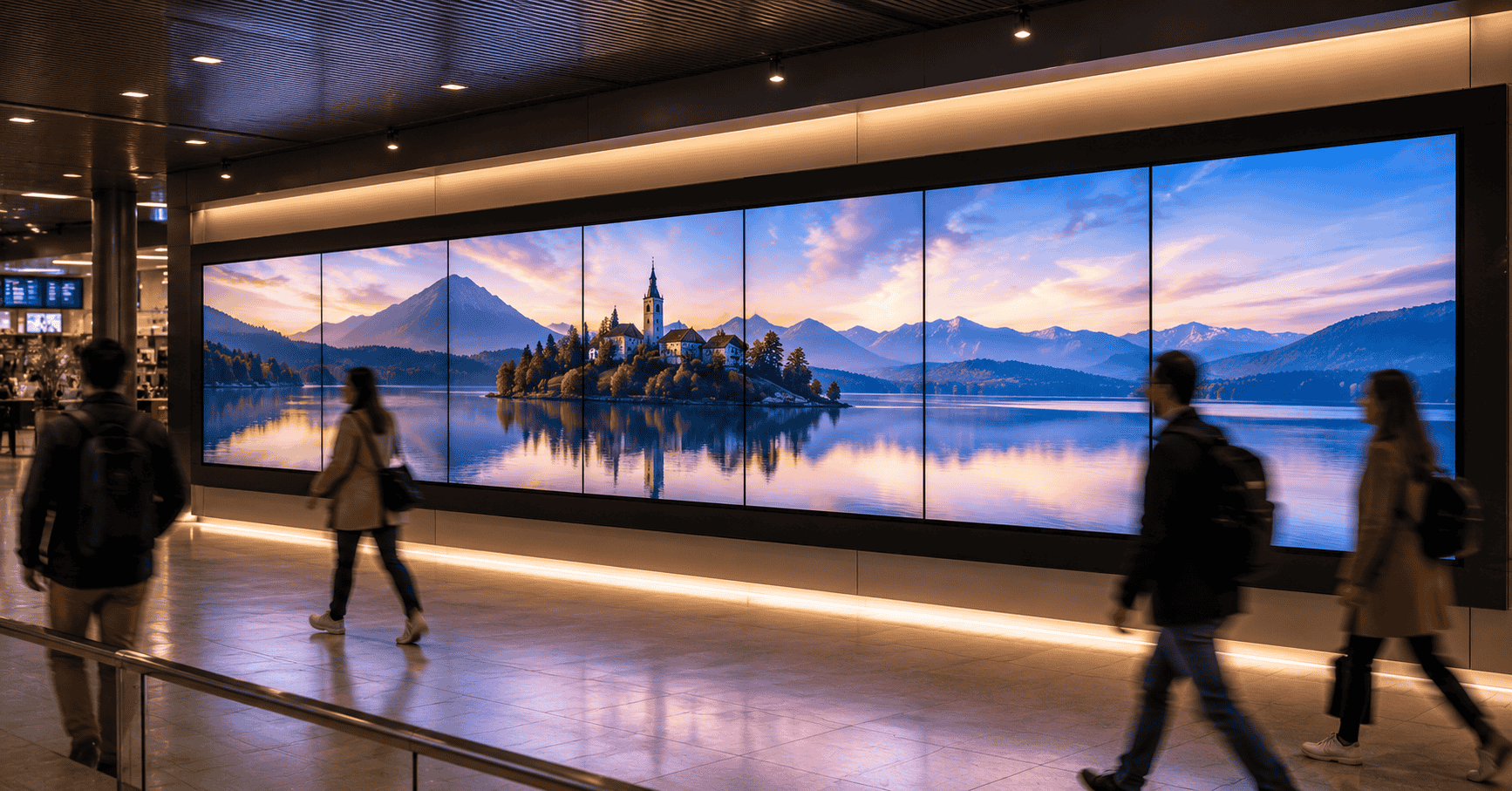
Of every display format in a commercial signage portfolio, the digital standee gets the least credit. It doesn’t have the spectacle of a video wall, the novelty of transparent LED, or the spatial drama of an LED cube. It’s a freestanding screen on a stand: functional, modest, and easy to underestimate.
That’s precisely why it’s worth a closer look. The digital standee is the workhorse format of commercial signage, the display most likely to be deployed correctly, most likely to deliver consistent ROI, and most likely to be specified wrong because operators don’t think carefully enough about a format that looks simple.
What a Digital Standee Actually Solves
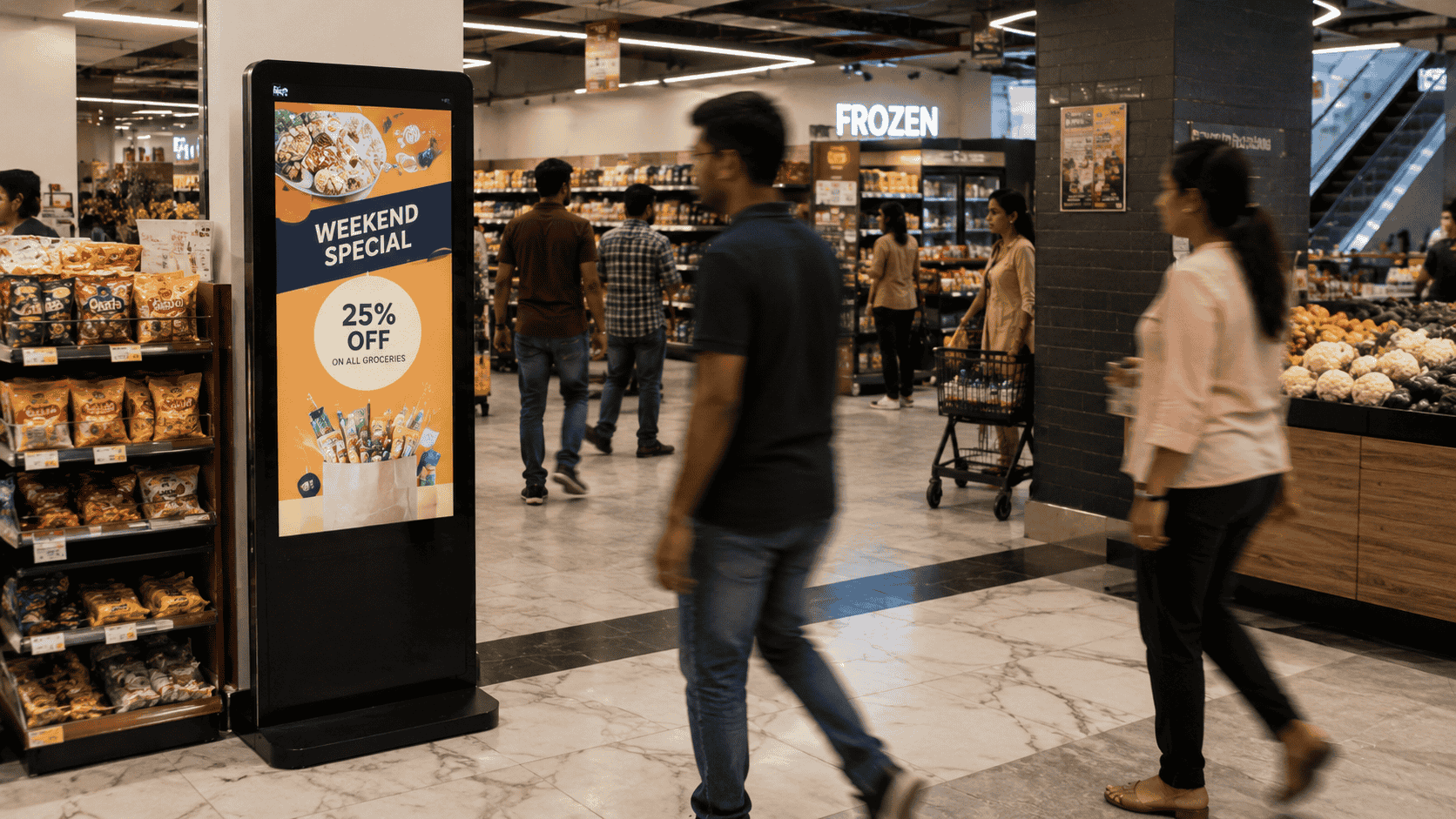
A digital standee is, at its core, a portable, freestanding display, typically ranging from 32 to 55 inches, mounted on a floor stand, often with a base that allows repositioning without structural installation. Unlike a wall-mounted screen or a built-in fixture, it doesn’t require permanent integration into the physical space.
This portability is the format’s defining advantage, and it solves a specific class of problem that fixed displays cannot: the need for visibility that can move.
Retail brand launches. When a new product line launches, the optimal placement for promotional content may be near the entrance for the first two weeks and near the relevant category section after that. A wall-mounted screen is fixed at installation. A standee can be repositioned by store staff in minutes, following the campaign rather than being constrained by where a screen happens to be bolted.
Seasonal and event-driven retail. A festive season campaign, a clearance sale, a category promotion; each of these benefits from a display that can appear exactly where the relevant merchandise is, for exactly the duration of the campaign, without requiring new wall infrastructure or a structural installation project.
Temporary and pop-up environments. For brand activations, pop-up stores, and temporary retail presence, situations where a permanent installation isn’t justified by the duration of the deployment, the standee is one of the few formats that delivers a genuine digital display experience without committing to fixed infrastructure.
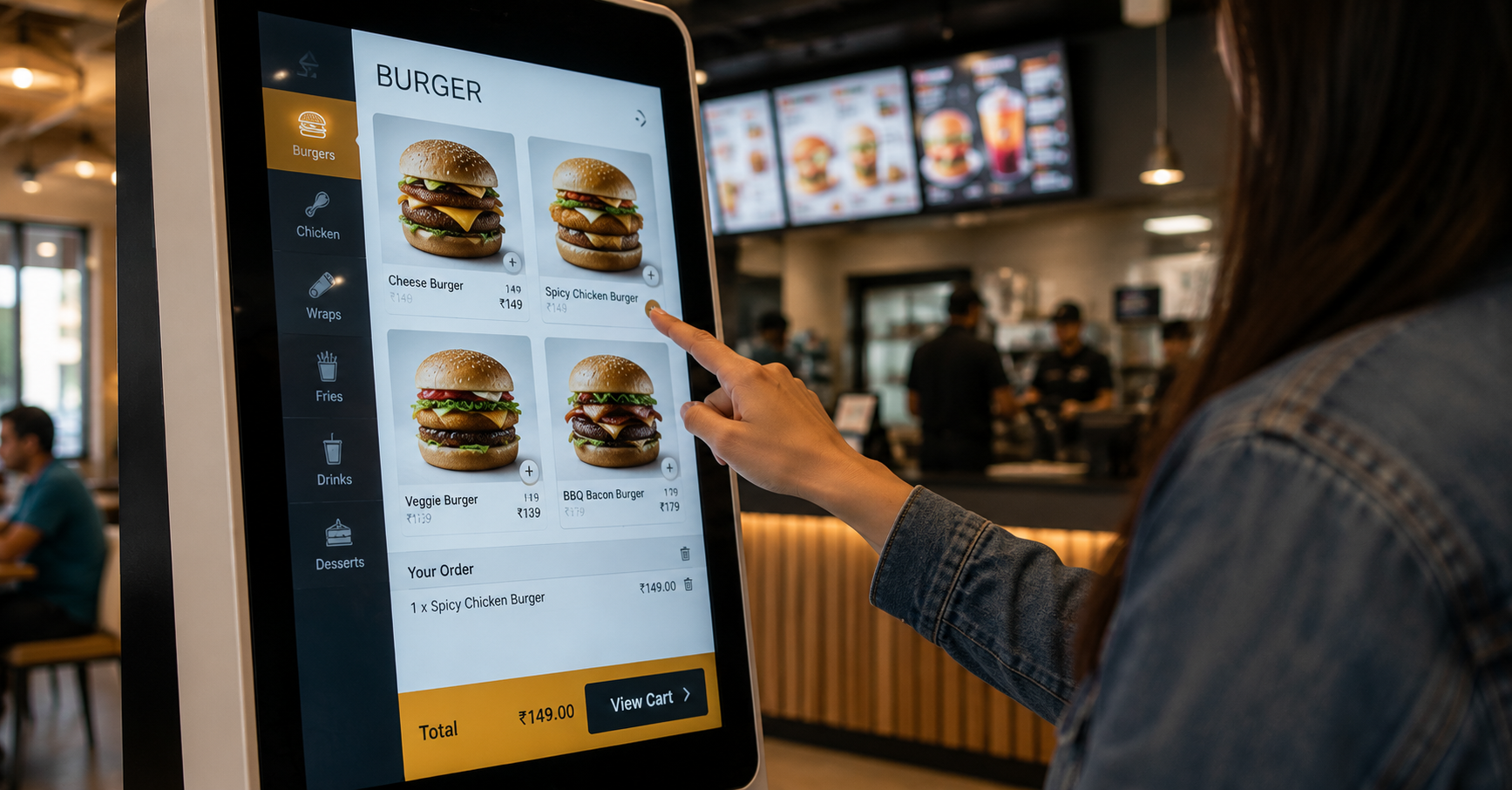
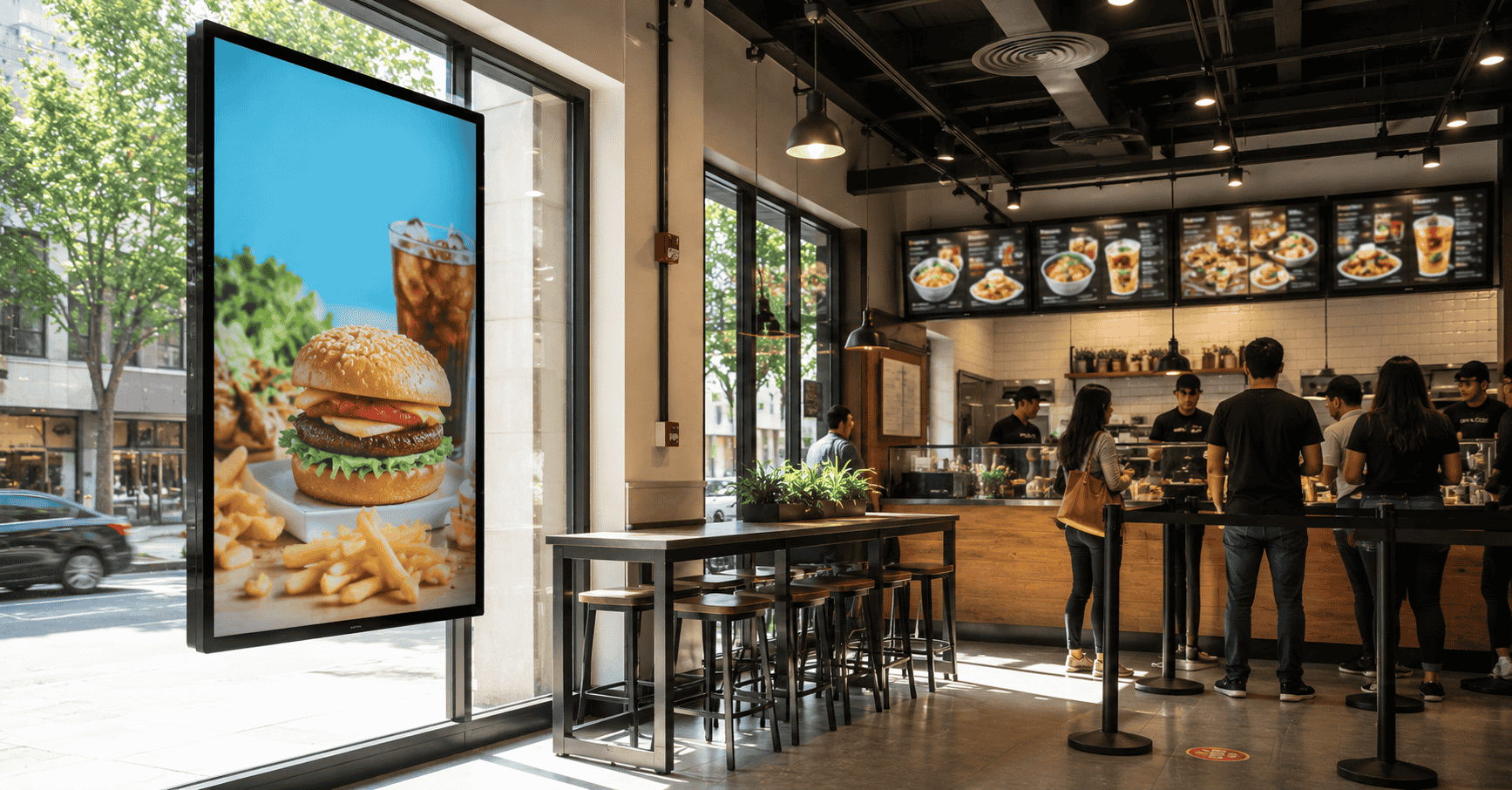
QSR queue and waiting areas. Positioned at the point where customers are standing in line or waiting for an order, a standee placed at the optimal sightline, adjustable as queue patterns change with renovations or layout shifts, does work that a wall-mounted screen, fixed at a single height and angle, often cannot.
Where Operators Get It Wrong
The simplicity of the format leads to a common mistake: treating standee deployment as a hardware decision rather than a placement and content strategy decision. A handful of recurring errors show up across deployments.
Wrong placement, set once and forgotten. A standee is only delivering its core advantage: flexibility, if it’s actually repositioned based on what’s happening in the store or environment. Many deployments place the standee once at installation and never move it again, which surrenders the format’s primary benefit and leaves the operator with a fixed-position screen that happened to come on a movable base.
Content that doesn’t match the placement logic. A standee near the entrance, addressing customers who are just arriving, needs different content from a standee near a specific category, addressing customers who are already engaged with that product type. Running identical content across all standee placements in a store ignores the contextual opportunity the format creates.
Underspecifying for footfall traffic. Standees placed in high-traffic walkways need to account for physical contact, bumps, jostling, accidental impact, that a wall-mounted screen never encounters. A standee with an inadequate base, insufficient weight, or fragile construction in a busy retail aisle is a liability rather than an asset, both for the equipment and for customer safety.
Treating the format as inherently lower-priority. Because standees are typically smaller and less expensive than video walls or large-format installations, content investment often follows the same logic, lower priority, lower production value, less frequent updates. This is a mismatch: a standee positioned at the right moment in a customer’s path can outperform a more expensive display in a less relevant location. The format deserves content investment proportionate to its placement value, not its hardware cost.
Specification Considerations That Actually Matter
Base stability and footprint. In high-traffic environments, base weight and footprint size directly affect both safety and practical usability, a standee with too small a footprint becomes a tripping hazard or gets knocked over; one with too large a footprint becomes an obstruction in tight retail aisles.
Screen height and viewing angle. Unlike a wall-mounted display with a fixed, predetermined viewing height, a standee needs height calibrated to the actual audience, eye-level for adult shoppers in a retail environment is different from eye-level considerations in an environment with significant child or wheelchair-user traffic. Adjustable height mounts add cost but solve this more flexibly than fixed-height units.
Cable management and power access. A freestanding unit needs power, and in a retail environment power access doesn’t always exist exactly where the optimal placement is. This is worth scoping during the site assessment, not discovering after the standee is already on the floor in the wrong location because that’s where the nearest power point happens to be.
Mobility versus permanence trade-off. Some standee deployments benefit from genuine mobility, wheels, lightweight construction, designed for frequent repositioning. Others are effectively semi-permanent, moved rarely, but valued for not requiring wall-mounting infrastructure. Specifying the right base and construction depends on which of these the deployment actually requires; over-engineering for mobility that won’t be used, or under-engineering for repositioning that’s part of the strategy, are both avoidable mismatches.
Content Management for a Mobile Format
Because standees are often deployed in greater numbers than fixed installations, multiple units across a single store, or units that move between locations within a multi-outlet network, the CMS requirements lean heavily toward efficient bulk management.
The practical question is whether content can be assigned to a standee by its current location rather than by a fixed device ID. A standee that moves from the entrance to the electronics section needs its content reassigned accordingly, and a CMS that requires manual reconfiguration of device-specific content every time a unit moves adds friction that discourages operators from actually using the format’s flexibility.
For multi-outlet retail operations, the ability to push different content to standees based on their current zone, rather than treating every standee in the network identically, is what separates a CMS that supports the format properly from one that merely tolerates it.
The Underrated Workhorse
The digital standee will never be the format that gets photographed for a case study cover image or featured in a brand’s flagship store press release. It doesn’t generate the same immediate visual impact as a video wall or the conceptual interest of transparent LED.
But for the specific job of putting timely, relevant content exactly where a customer’s attention is, and being able to move that content as circumstances change, it remains one of the most cost-effective, operationally flexible tools in a retail or QSR display strategy. The operators getting the most value from their signage investment are often not the ones with the most spectacular installations. They’re the ones using the simple formats correctly.
If you’re planning a display rollout and want to understand where standees fit into a broader strategy, alongside fixed displays, kiosks, or larger-format installations, we’d be glad to walk through it.
Get in touch: contact@techworksworld.com | +91-99109 65918 | techworksworld.com