The Guest Doesn’t Care About Your Technology — They Care About Not Waiting
A hotel guest checking in after a long flight doesn’t think about digital signage. They think about whether the queue at the front desk is long, whether the room is ready, and whether someone can point them toward the restaurant without a five-minute explanation involving two elevators and a left turn.
This is the right way to think about hospitality technology — not as a feature to showcase, but as friction to remove. The properties getting genuine value from digital displays in 2026 are the ones that understood this distinction early: the guest doesn’t care about the screen. They care about what the screen saves them from.
Where Friction Actually Lives in a Guest’s Journey
Walk through a typical stay and the friction points are predictable: a check-in queue with no visibility into wait time, a lobby with no clear sense of where anything is, a restaurant with a printed menu that doesn’t reflect today’s specials, a conference floor with no indication of which room hosts which event, an elevator lobby with directional signage that hasn’t been updated since the last renovation.
None of these are dramatic failures. They’re small, accumulated frustrations — the kind that don’t generate a complaint but do shape whether a guest’s overall impression is “smooth” or “fine, I suppose.” For hospitality brands competing heavily on guest experience scores and repeat bookings, “fine, I suppose” is not a good outcome.
Where Digital Displays Remove Friction — Not Just Add Polish
Wayfinding That Actually Updates
Static directional signage is fixed at installation and stays fixed until someone notices it’s wrong — a renamed conference room, a relocated spa, a temporarily closed pool. Digital wayfinding displays at key junctions (lobby, elevator banks, conference floors) can be updated centrally and instantly, which matters enormously for properties hosting frequent events, weddings, or conferences where room assignments and schedules shift week to week.
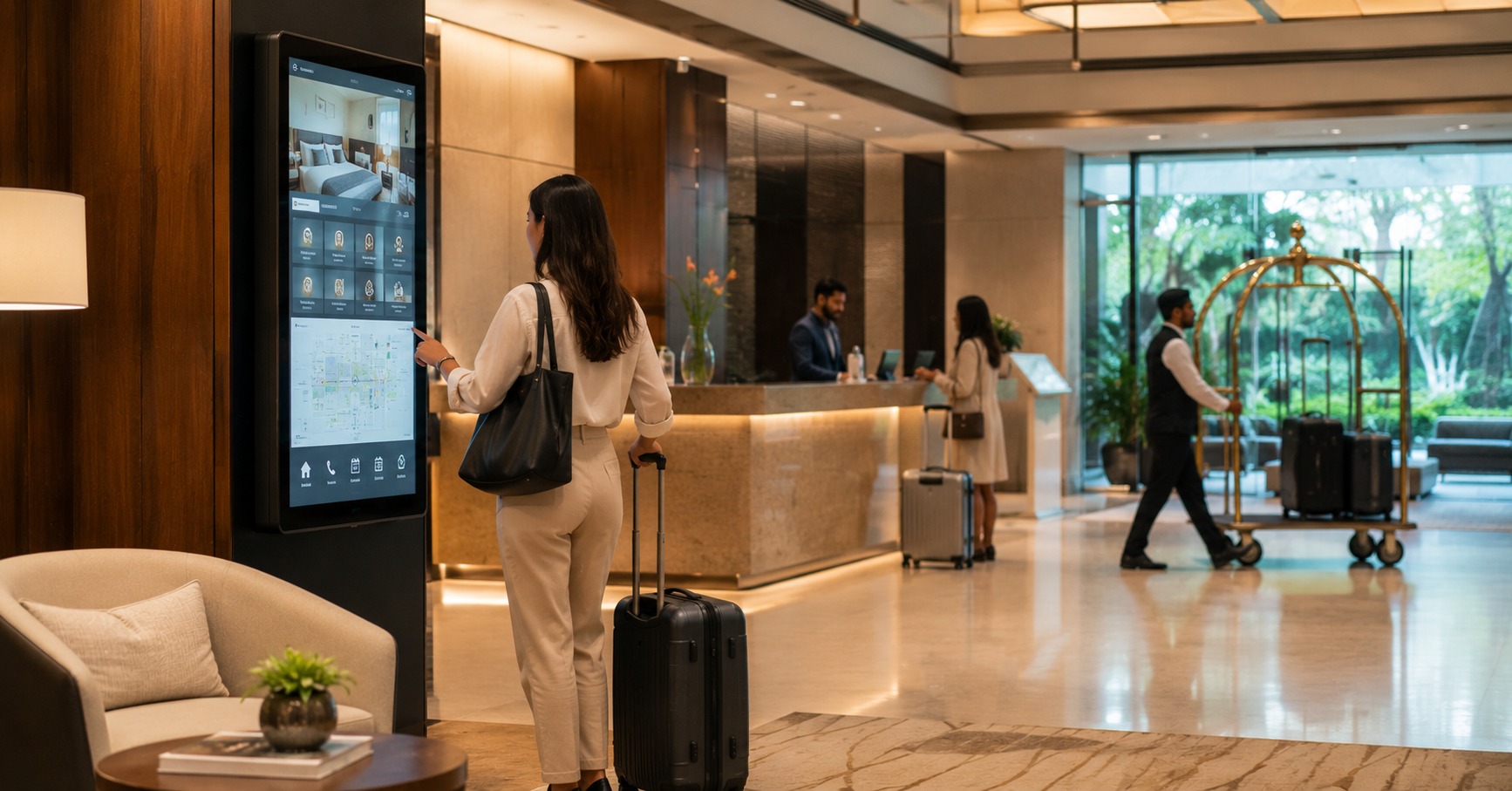
For larger properties, an interactive directory — guests touch a screen, find what they need, get directions — removes the need to ask staff for basic navigation, freeing staff time for higher-value guest interactions.
Dynamic F&B Menus Across the Property
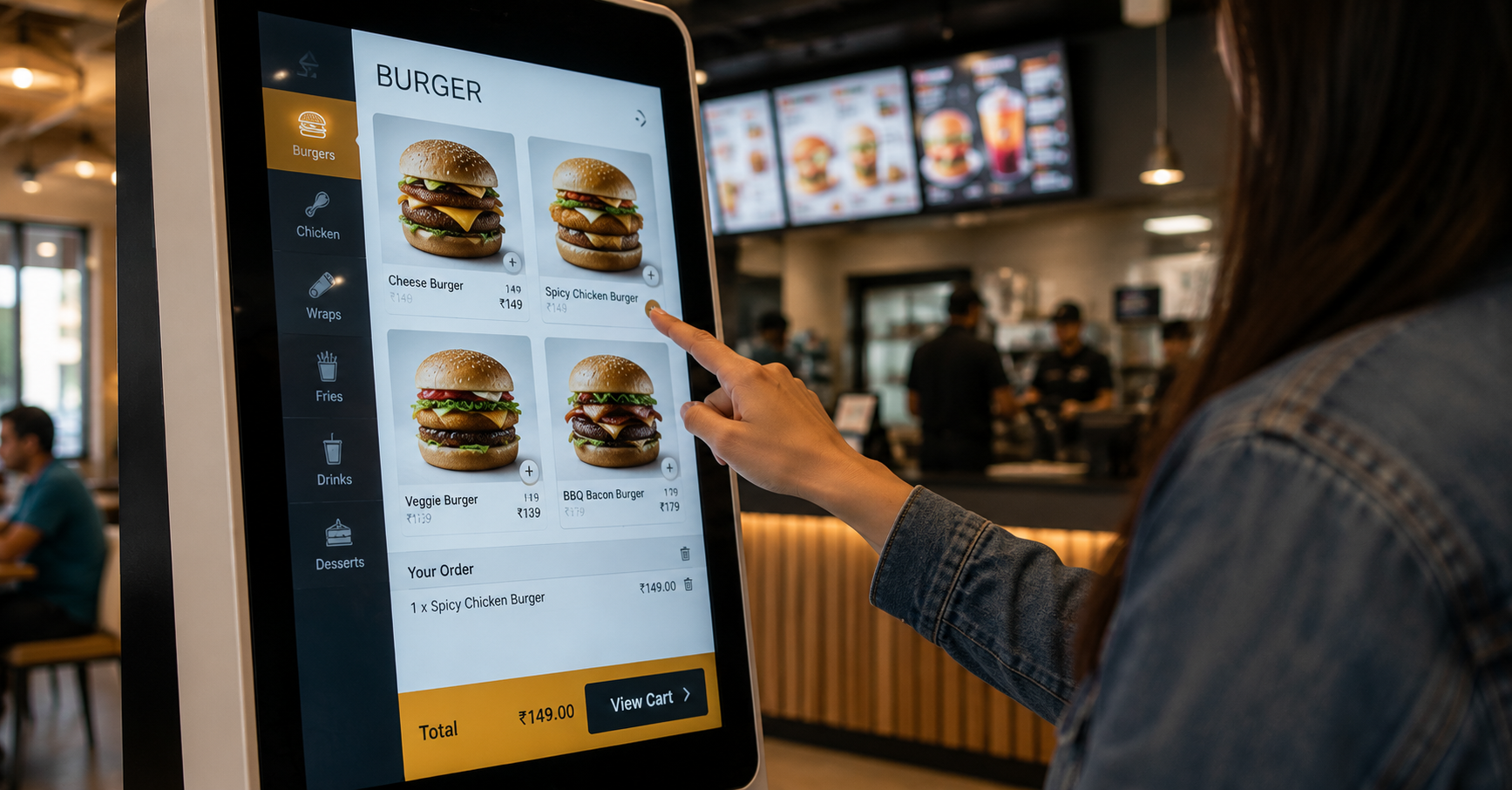
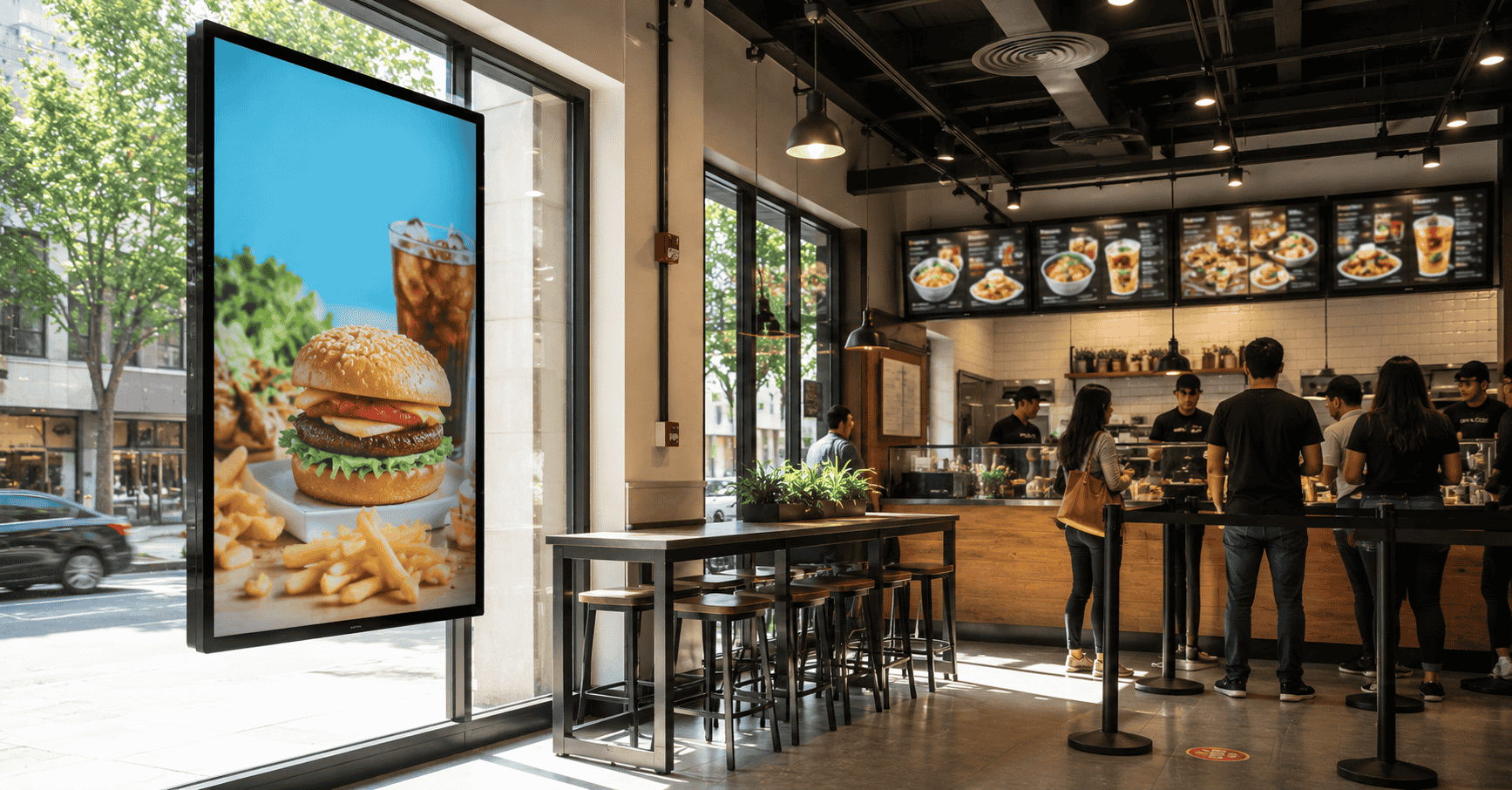
A hotel restaurant, lobby café, and banquet operation often run on three different printed menu systems, updated on three different schedules, by three different teams. A digital menu board approach — the same logic that works in standalone QSR, adapted for hospitality dayparts — lets a property run breakfast, lunch, and dinner menus automatically, update specials in real time, and maintain visual consistency across every F&B outlet on the property.
This matters particularly for resorts and larger hotels where the food and beverage operation is itself a significant revenue centre, not just a guest amenity.
Event and Conference Signage
For properties with banquet and conference facilities, digital signage outside meeting rooms — showing the event name, schedule, and room status — replaces the easel-and-printed-sign approach that becomes outdated the moment a schedule shifts. For multi-event days, a digital approach scales in a way that printed signage simply cannot; updating fifteen room signs for a schedule change takes minutes centrally instead of a staff member walking the floor with new printouts.
Check-In and Lobby Communication
Lobby displays showing local weather, property information, today’s events, or curated local recommendations give guests useful, low-effort information during the moments they’re naturally waiting — at check-in, near the elevators, in a lounge area. This isn’t about advertising; it’s about using otherwise-dead time productively, in a way a static poster can’t, because the content stays current without anyone needing to remember to change it.
The Multi-Property Challenge
For hospitality groups operating more than one property, the operational case for centralised content management becomes significantly stronger than it is for a single QSR outlet or retail store.
A regional hotel group running ten properties needs brand-consistent content — the same visual identity, the same tone — while still allowing local relevance: property-specific events, local weather, region-specific F&B offerings. This requires a CMS that supports centralised brand control with local override capability, rather than either fully centralised (no local relevance) or fully decentralised (brand inconsistency, version drift across properties) models.
This is also where the case for digital over print becomes clearest at scale: a brand-wide rebrand, a new loyalty programme launch, or a seasonal campaign can roll out across every property simultaneously, rather than waiting for printed materials to be designed, produced, and shipped to each location individually.
What Hospitality Gets Right That Other Verticals Sometimes Miss
Hospitality properties that deploy digital signage well tend to share one trait that’s less common in other verticals: they think about the guest’s emotional state at each touchpoint, not just the information being conveyed.
A business traveller checking in late at night wants speed and clarity, not a branded video loop. A family checking in for a holiday wants warmth and helpful orientation. A conference attendee wants precise, reliable schedule information with zero ambiguity. The best hospitality deployments vary tone and content type by location and likely guest state — not just by daypart, but by the actual job the display is doing in that specific moment of the journey.
This level of thoughtfulness is what separates hospitality signage that genuinely improves guest experience scores from signage that’s simply present.
The Right Starting Point
For hospitality properties beginning a digital signage rollout, the temptation is to start with the most visible space — usually the lobby. A more effective starting point is to map the entire guest journey first, identify the two or three points of greatest friction or greatest dead time, and deploy there first. A wayfinding display that solves a genuine navigation problem will earn more goodwill in month one than a beautifully produced lobby brand film that guests walk past without a glance.
If you’re planning a digital signage rollout for a hotel, resort, or hospitality group — whether starting with a single property or planning a multi-site deployment — we’d be glad to walk through where the highest-impact starting points are for your guest journey.
Get in touch: contact@techworksworld.com | +91-99109 65918 | techworksworld.com