19 Years, 20,000 Screens: What We’ve Learned About Digital Signage in India
When we deployed our first digital signage installation in India, the screens cost more than most people’s cars. Content had to be physically transferred on a USB drive. “Cloud-based CMS” wasn’t a phrase anyone used, because the cloud barely existed in a commercial sense. And the client had to explain to their own management why they were replacing a perfectly good lightbox with a television.
That was 2007. A lot has changed.
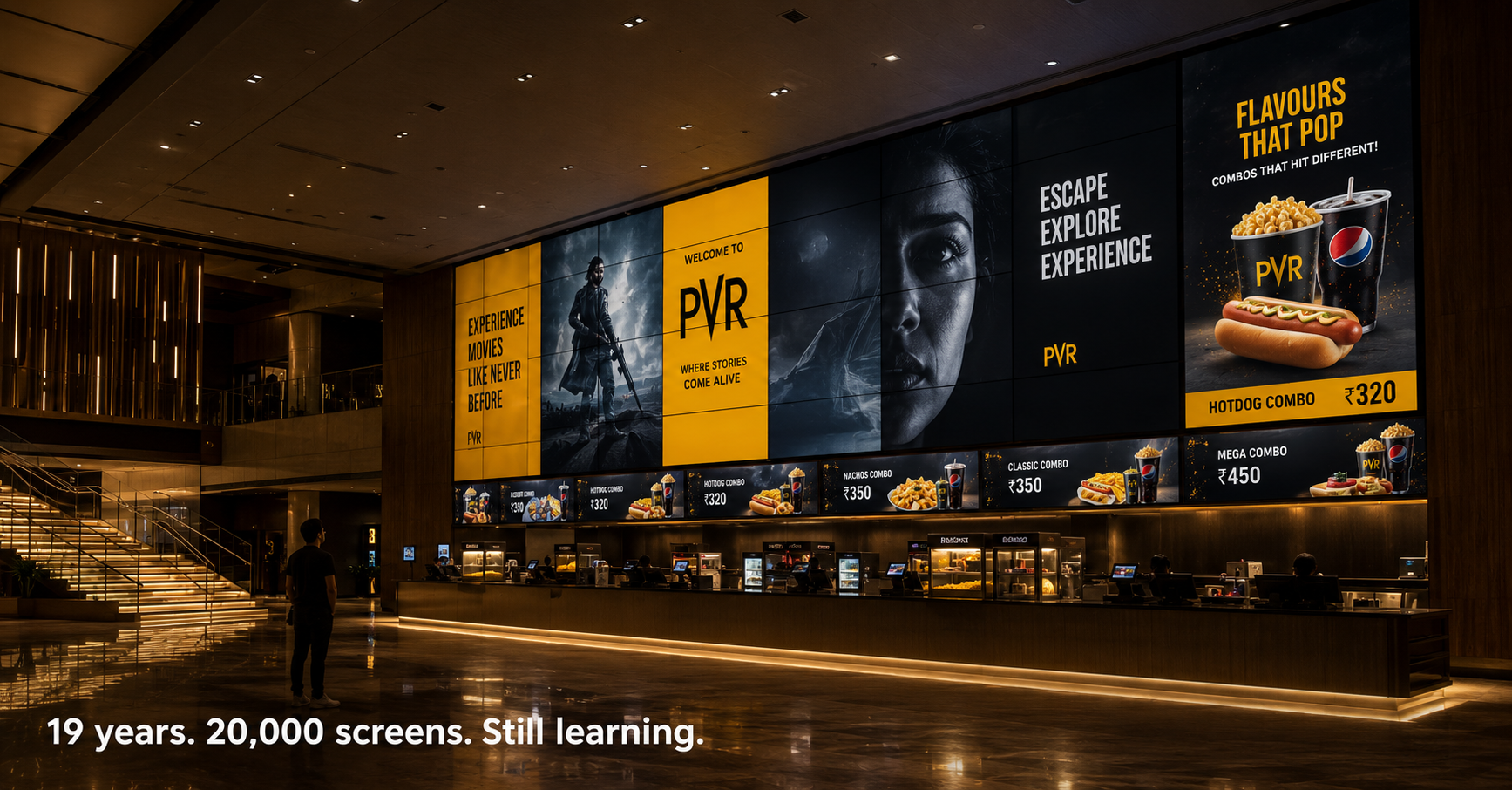
Over nineteen years and more than 20,000 live screens across India, we’ve worked with QSR chains, retailers, museums, corporate campuses, and hospitality brands. We’ve seen deployments that transformed how a business operates, and deployments that became expensive lessons in what not to do.
What follows isn’t a product pitch. It’s a summary of what we’ve actually learned — about technology, about clients, and about why digital signage in India works very differently from how the global playbooks describe it.
The Market Grew Up Faster Than the Industry Expected
In 2007, selling digital signage in India was a category-creation exercise. You weren’t competing with other digital signage vendors — you were competing with the idea that a lightbox or flex board was sufficient.
The first decade was mostly about proving the concept: demonstrating uptime reliability, showing that content could actually be managed remotely, convincing finance teams that the economics worked over a three-year horizon. Deals were slow. Pilots were long. Everyone wanted a reference site before committing.
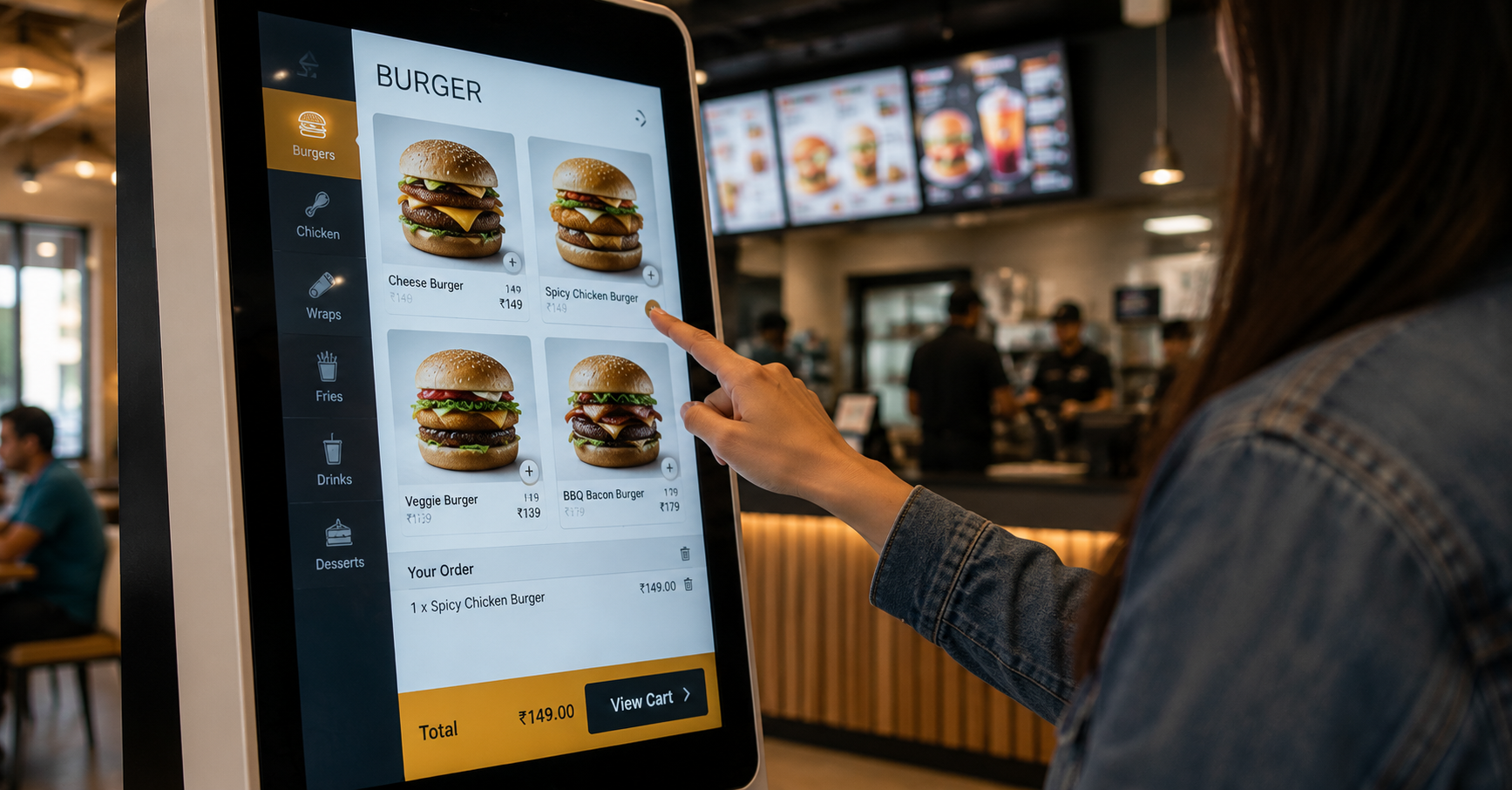
By the mid-2010s, that changed. QSR chains expanded aggressively — both domestic brands and international franchises — and digital menu boards became standard expectation rather than premium option. Retail followed. Corporate campuses adopted digital directories and lobby displays. The question shifted from “why digital?” to “which digital, and who can execute it?”
The vendors who survived that transition were the ones who had built genuine deployment capability in India — not just imported a hardware catalogue.
India Is Not a Scaled-Down Version of Any Other Market
This is the lesson that international vendors keep relearning.
Power supply in India is not stable in the way it is in Western European or North American markets. A screen that runs flawlessly in a controlled environment in Germany may show unexplained behaviour on Indian power — unless the installation accounts for voltage fluctuations at the hardware level.
Heat and humidity across Indian geographies are not uniform. A deployment in Mumbai behaves differently from one in Delhi, which behaves differently from one in Chennai. Screens specified without accounting for ambient temperature ranges fail earlier than their rated lifespans suggest they should.
Connectivity — particularly in Tier 2 and Tier 3 cities — cannot be assumed to be consistent. A CMS architecture that depends on continuous cloud connectivity works well in a Mumbai mall and fails intermittently in a franchise outlet in a smaller city. The system needs to be designed to handle offline gracefully, caching content locally and syncing when connectivity returns.
None of this is exotic knowledge. But it only comes from having actually deployed across India, in real locations, over years — not from reading a hardware spec sheet.
The Technology Was Never the Hard Part
Looking back across hundreds of deployments, the ones that underperformed rarely failed because the screens stopped working. They failed because of everything around the screens.
Content was the most common problem. Operators would invest in a high-quality hardware installation and then push placeholder content onto the screens while “waiting for the agency to finish the creative.” Weeks became months. In several cases, screens ran on demo loops for an entire quarter. The display was live; the investment was not.
Content operations — the workflow, the team, the approval process, the update cadence — needs to be planned before installation, not after. The question “who is going to manage this, and how often?” is as important as any hardware specification.
Project management was the second most common point of failure. Digital signage installations in multi-outlet environments involve coordination across facilities, IT, marketing, and operations teams — often simultaneously. Without a single point of accountability on the client side, decisions stall, timelines slip, and what should be a six-week rollout stretches to six months.
The third issue was expectation misalignment. Clients who expected immediate, measurable revenue impact from day one — without the content strategy or operational discipline to drive it — were invariably disappointed. Digital signage is infrastructure. Like any infrastructure, the return depends on how well you use it.
What 20,000 Screens Teaches You About What Works
After enough deployments, patterns become clear.
Simplicity scales; complexity doesn’t. The installations that have stayed healthy longest are the ones with the simplest content architectures — a clear template system, a predictable update cadence, a small team with clear ownership. Complex, heavily customised setups look impressive at launch and become unmanageable at month six.
The CMS matters as much as the screen. We’ve seen clients move from competitors to us not because of hardware quality — screens from reputable manufacturers are largely comparable at a given price point — but because their previous CMS made content updates so painful that nobody was bothering. A screen you can’t update easily is a lightbox you paid too much for.
Multi-outlet control is non-negotiable for growing brands. The value of digital signage compounds with scale. A brand running 10 outlets that can push a price update to all of them in three minutes has a genuine operational advantage. That advantage disappears entirely if content management requires outlet-by-outlet manual updates.
After-sales is where reputations are made. A screen that goes dark during lunch service on a Saturday is a crisis for the operator. How quickly that gets resolved — and how painlessly — is what operators remember, recommend, and warn others about. Our service infrastructure has been as important to our longevity as our product quality.
What the Next Decade Looks Like
The technology continues to evolve in directions that were hard to imagine in 2007. Display quality at commercial price points is dramatically better. CMS platforms are genuinely easier to use. Integration between signage systems and POS, loyalty, and inventory platforms is becoming standard expectation rather than bespoke project.
The fundamentals, however, haven’t changed. Operators who treat digital signage as an active commercial tool — with content strategies, operational discipline, and genuine ownership — get results. Operators who treat it as a one-time infrastructure purchase tend to get underwhelming outcomes from hardware that was perfectly capable of delivering more.
Nineteen years in, that’s still the most important thing we know.
If you’re building a digital signage strategy for your brand — whether you’re starting from scratch or rethinking an existing deployment — we’d be glad to share what we’ve seen work.
Get in touch: contact@techworksworld.com | +91-99109 65918 | techworksworld.com