Digital Menu Boards vs. Static Boards: The Real ROI Calculation for Indian QSRs
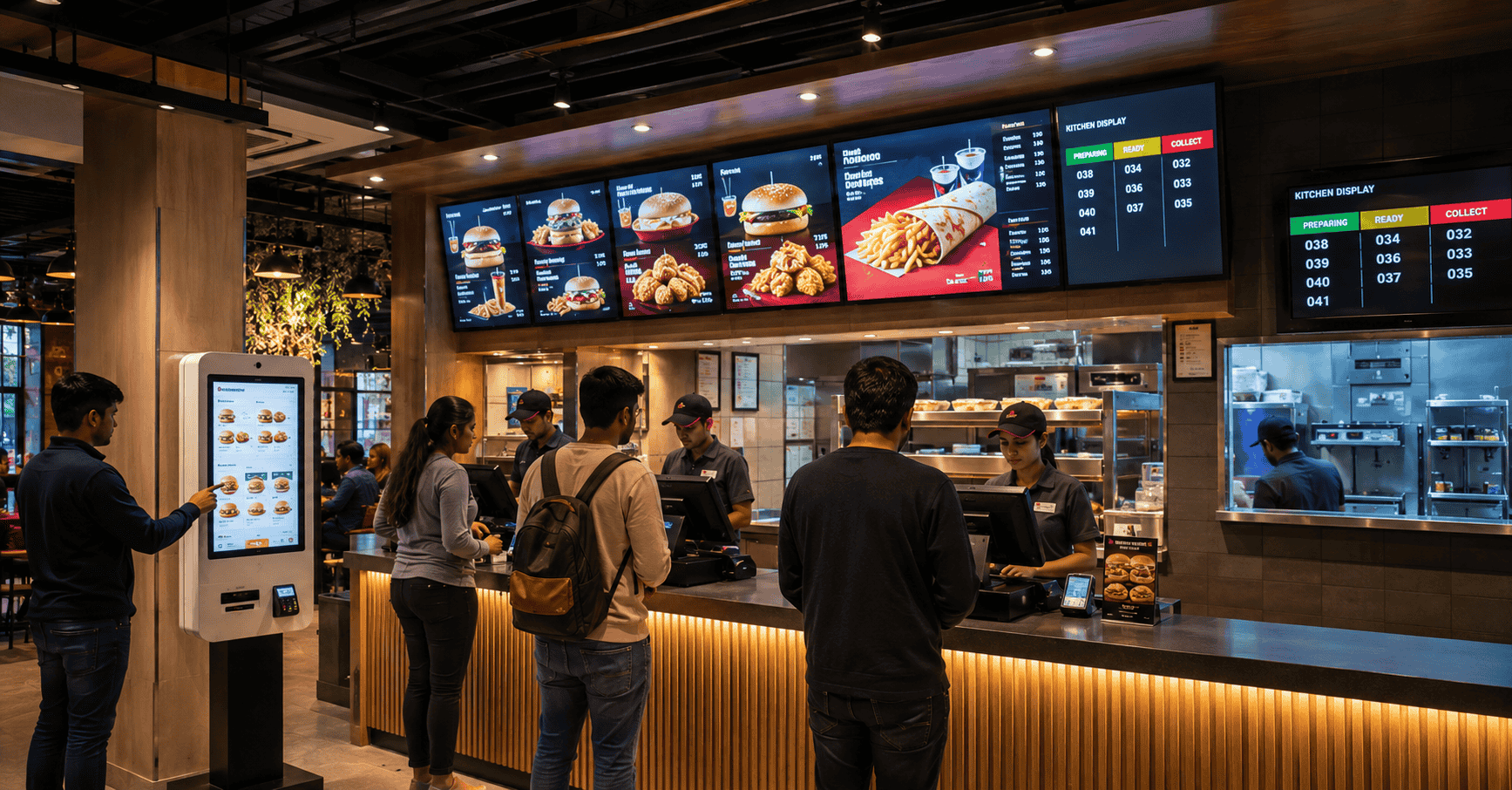
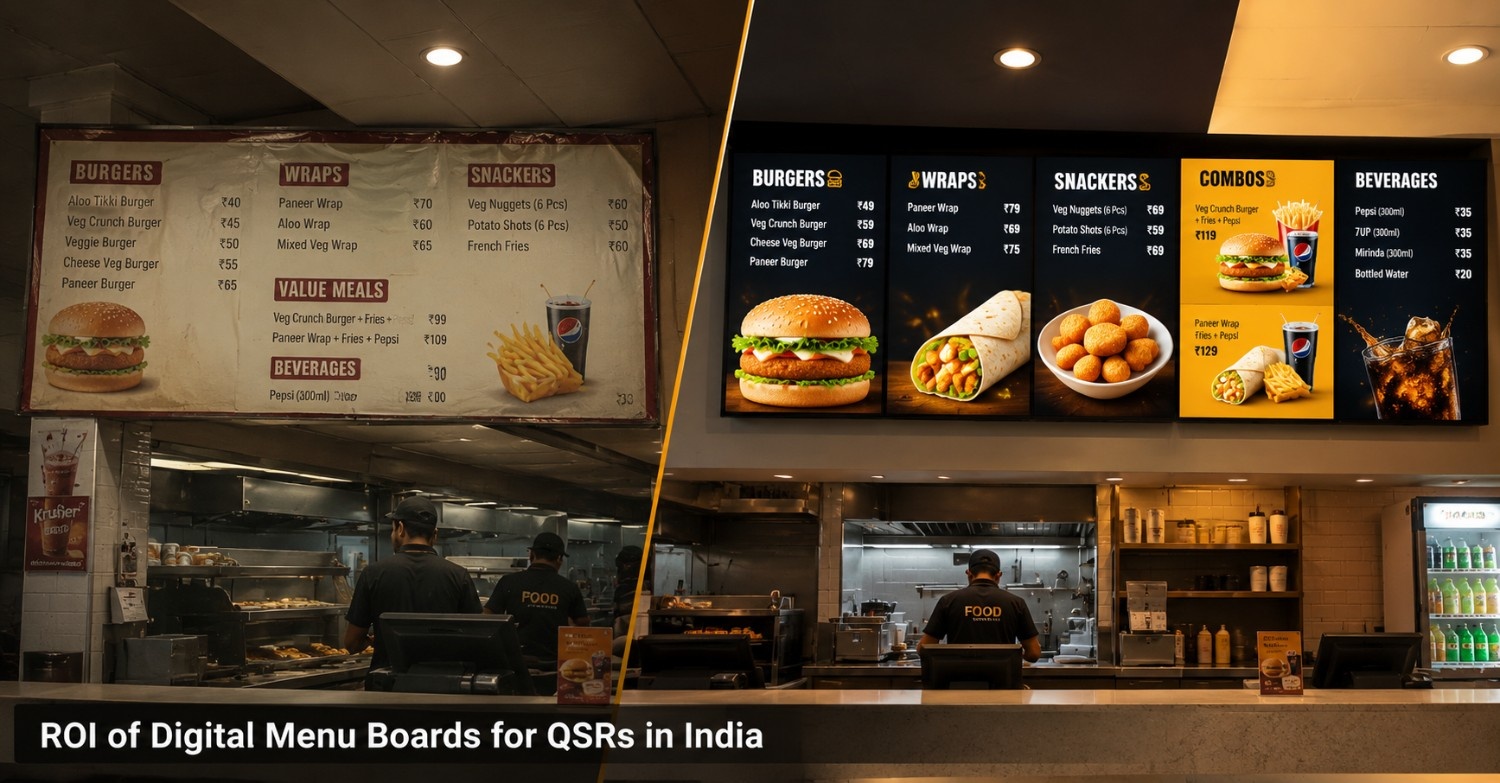
Walk into any QSR in India today and you’ll notice one of two things behind the counter: a bright, animated digital menu board or a printed flex board that hasn’t changed since the last price revision.
Both show you the menu. But only one of them is actually working for the business.
The debate between digital menu boards (DMBs) and static boards is not really a design debate, it’s a business case. And for most QSR operators, the numbers tell a clear story once you actually work through them.
The Hidden Costs of Static Boards
Static flex boards look cheap on day one. A printed flex board for a standard outlet might cost anywhere from ₹5,000 to ₹20,000 depending on size and quality. For a franchisee running three or four outlets, that feels manageable.
But the lifetime cost of static is rarely calculated honestly. Here’s what operators don’t add up:
- Reprint costs every time there’s a price change, a new item launch, or a promotional campaign: typically 4 to 8 times a year for a growing QSR.
- Logistics and installation costs for getting new boards to every outlet, which multiplies with every additional location.
- Downtime between decision and execution, the days (sometimes weeks) when your menu board is already wrong.
- Missed revenue from promotions that couldn’t be activated quickly enough – seasonal offers, happy hour windows, clearance items.
Static boards are not a one-time cost. They’re a recurring operational drag — and that changes the ROI math significantly.
What Digital Menu Boards Actually Do
Digital menu boards are screens but the value they deliver is not really about the screen itself. It’s about what you can do with the screen once it’s connected to a content management system.
With a cloud-based CMS like xtravu DSS:
- A price update pushed from HQ goes live across all outlets simultaneously — in minutes, not weeks.
- A limited-time offer can run during the 12–3 PM window and automatically revert after — without any staff intervention.
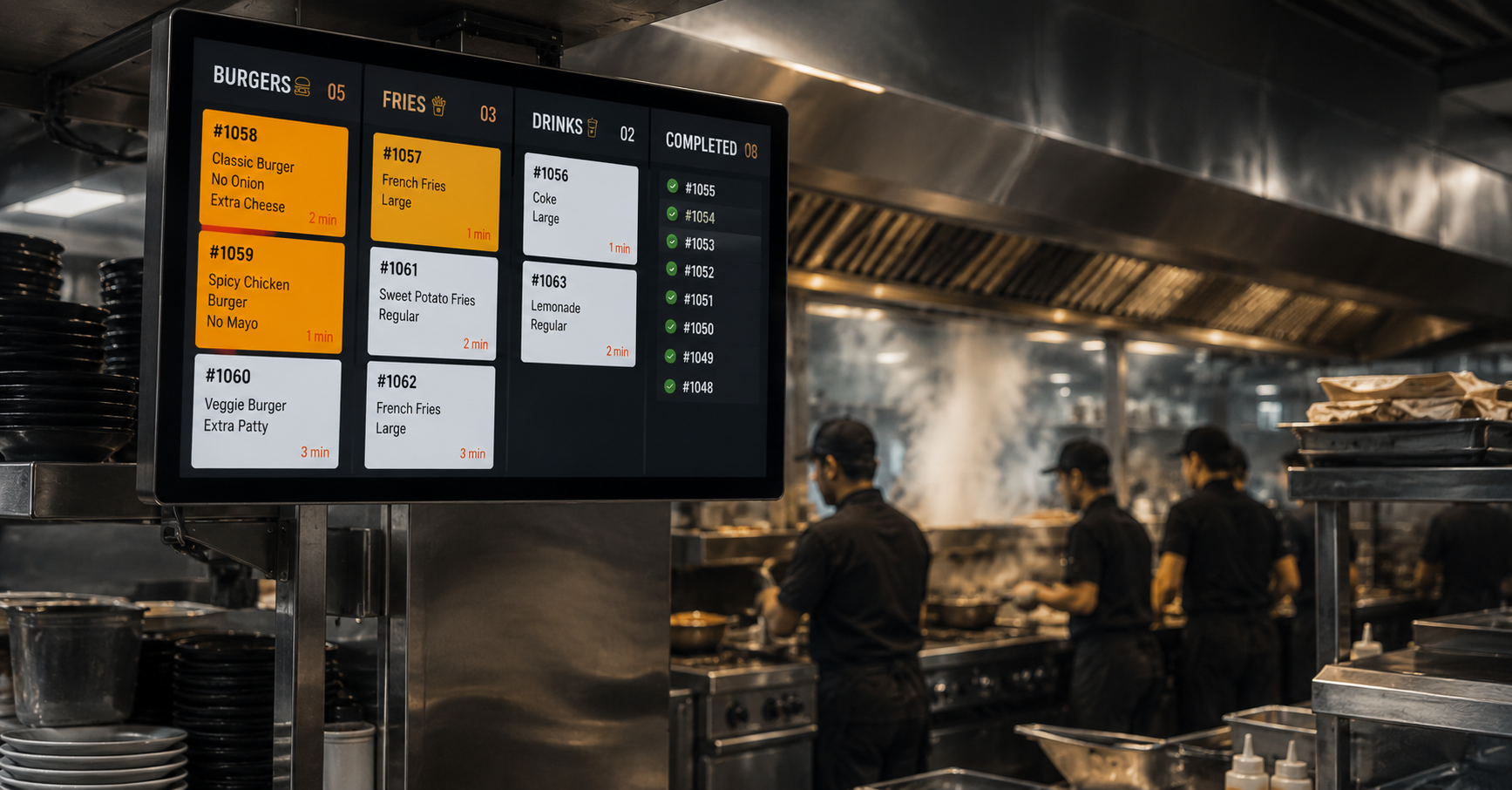
- Sold-out items can be greyed out or removed from display instantly, reducing awkward counter conversations and order errors.
- High-margin items can be spotlighted with motion and visual contrast — directing attention exactly where the operator wants it.
This is the shift that matters: from a static display of options to an active sales tool at the point of purchase.
The ROI Calculation: Breaking It Down
Let’s work through a realistic scenario for a QSR operator with 5 outlets.
| Cost Item | Static Boards (5 outlets, 3 years) | Digital Menu Boards (5 outlets, 3 years) |
| Initial hardware/print cost | ₹75,000 | ₹5,00,000 |
| Reprints / content updates (6x per year) | ₹5,40,000 | ₹0 (CMS updates) |
| CMS / software subscription | Nil | ~₹60,000 |
| Estimated 3-year total | ₹6,15,000+ | ₹5,60,000 |
Note: These are indicative figures. Hardware costs vary by screen size, brand, and configuration. The key insight is that by Year 2, the recurring print-and-logistics costs of static boards push total spend past a comparable DMB deployment — without any of the operational or revenue upside.
The Revenue Side: What Static Boards Can Never Do
ROI calculations usually focus on cost savings. But for QSRs, the stronger argument for digital menu boards is on the revenue side.
Research consistently shows that dynamic, well-designed menu boards influence ordering behaviour. A few mechanisms that operators report in practice:
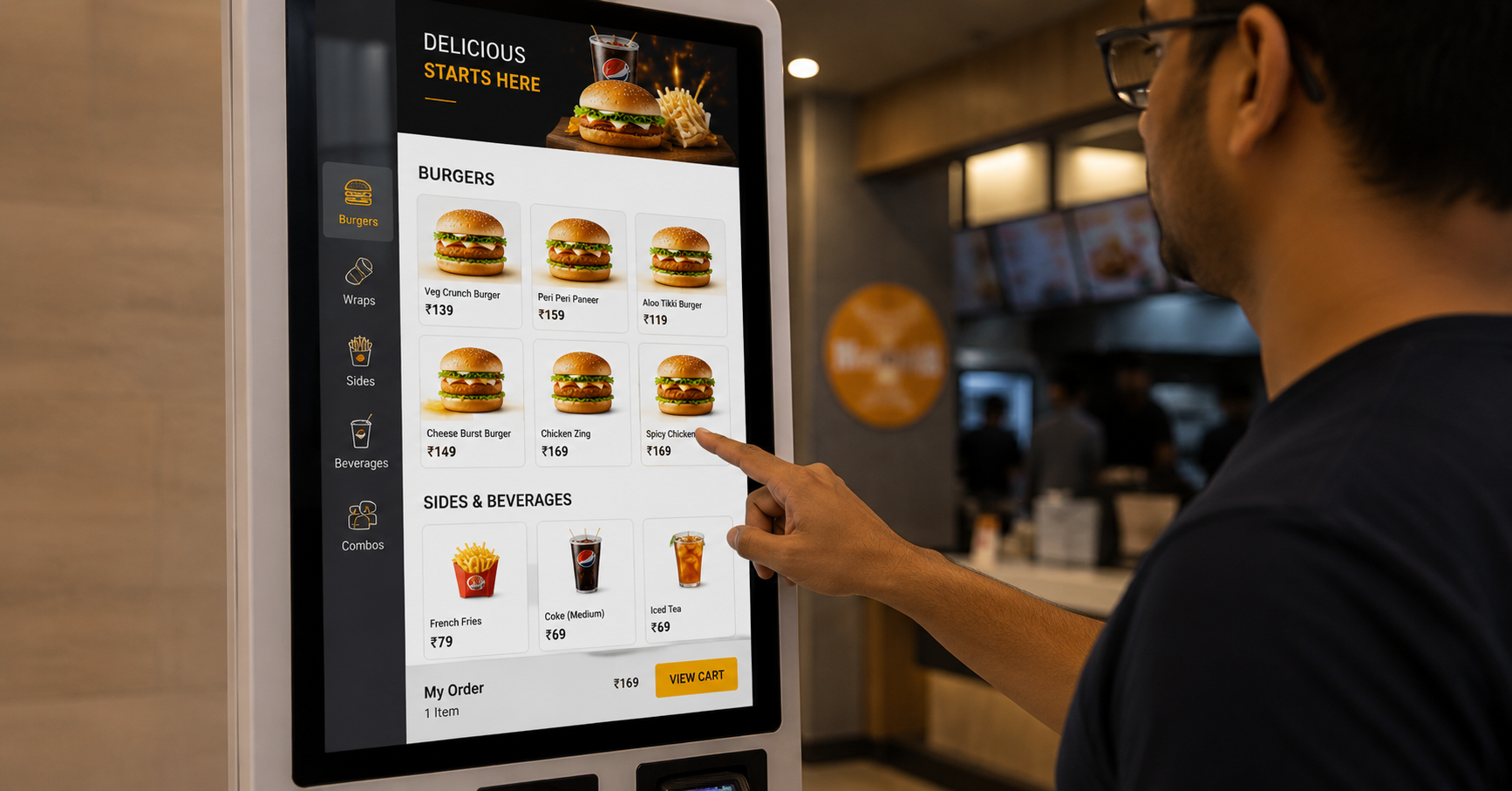
- Upsell prompts at the right moment — a combo suggestion or add-on visible precisely when a customer is deciding — can lift average ticket size by 5–15%.
- Daypart-specific menus — breakfast boards in the morning, snack combos in the afternoon, dinner sets in the evening — drive relevance and reduce decision fatigue.
- Visual hierarchy — motion, contrast, and placement — can direct attention to higher-margin items without changing the menu itself.
- Flash sale windows — a 30-minute offer communicated in real time — can clear slow-moving SKUs without deep discounting.
Static boards cannot do any of this. They show the same thing at 8 AM that they show at 8 PM. They promote the same items on a Tuesday that they do on a holiday weekend. That’s not a display — it’s wallpaper.
Common Objections and What They Actually Mean
“The upfront cost is too high.”
Understandable — but as the table above shows, by Year 2 the math typically flips. The question isn’t whether you can afford digital boards. It’s whether you can afford to keep paying for static ones.
“We don’t change our menu that often.”
Even a menu that rarely changes benefits from dynamic visual hierarchy and daypart scheduling. And when GST rates shift, or a supplier changes, or you want to run a Diwali promotion — you’ll wish the content was changeable.
“What if the screen goes down?”
Commercial-grade screens used in QSR deployments are rated for 16–18 hours of daily operation. A good installation includes a service agreement that covers response within hours, not days. The risk is real but manageable — and your static board can also fade, tear, or fall off the wall.
What to Look for in a DMB Deployment Partner
Not all digital menu board installations are equal. Before committing, operators should evaluate:
- Hardware quality — commercial-grade displays rated for continuous operation, with appropriate brightness for the ambient light conditions of your outlet.
- CMS capability — can you update content yourself, without depending on a vendor every time? Is dayparting and scheduling built in?
- Multi-outlet control — if you’re running more than one outlet (or planning to), can you push updates to all screens from a single dashboard?
- After-sales support — what’s the committed response time if a screen has an issue? Who handles it, and how fast?
- Track record — has the partner deployed at scale, across multiple outlets and cities? Or is this their first QSR install?
The Bottom Line
Static menu boards are not a budget-friendly option. They’re an expensive, inflexible, revenue-limiting choice that happens to have a low sticker price.
Digital menu boards, deployed correctly, pay for themselves — and then keep working. The operators who understand this aren’t asking “can we afford digital?” They’re asking “how quickly can we get it done?”
If you’re evaluating a DMB deployment for your QSR outlets — whether you’re a single-brand franchise operator or a multi-concept F&B group — we’d be happy to walk through the numbers with you.
Get in touch: contact@techworksworld.com | +91-99109 65918 | techworksworld.com