
June 2026
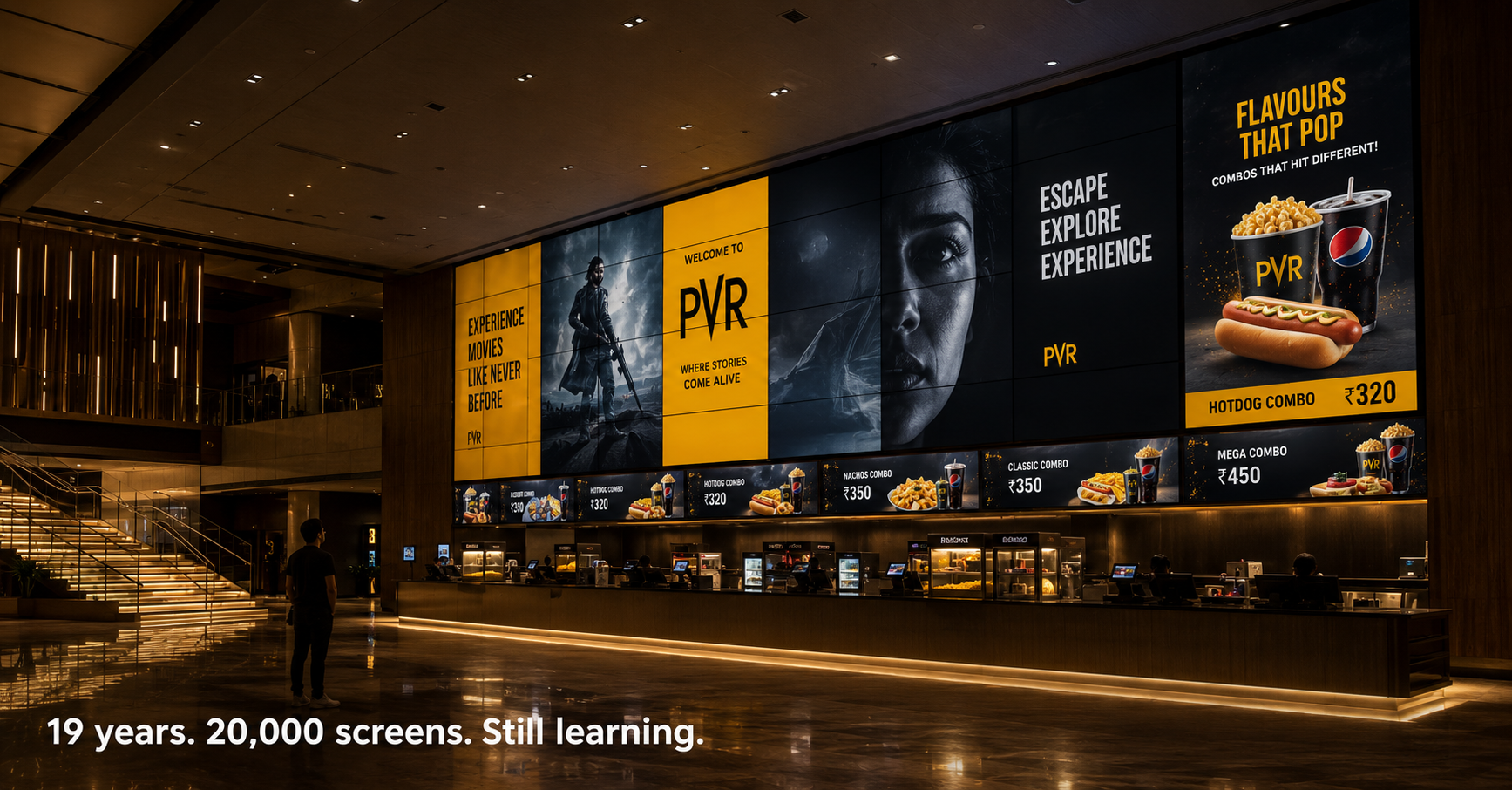
19 Years, 20,000 Screens: What We’ve Learned About Digital Signage in India
When we deployed our first digital signage installation in India, the screens cost more than most people’s cars. Content had to be physically transferred on a USB drive. “Cloud-based CMS” wasn’t a phrase anyone used, because the cloud barely existed in a commercial sense. And the client had to explain to their own management why […]
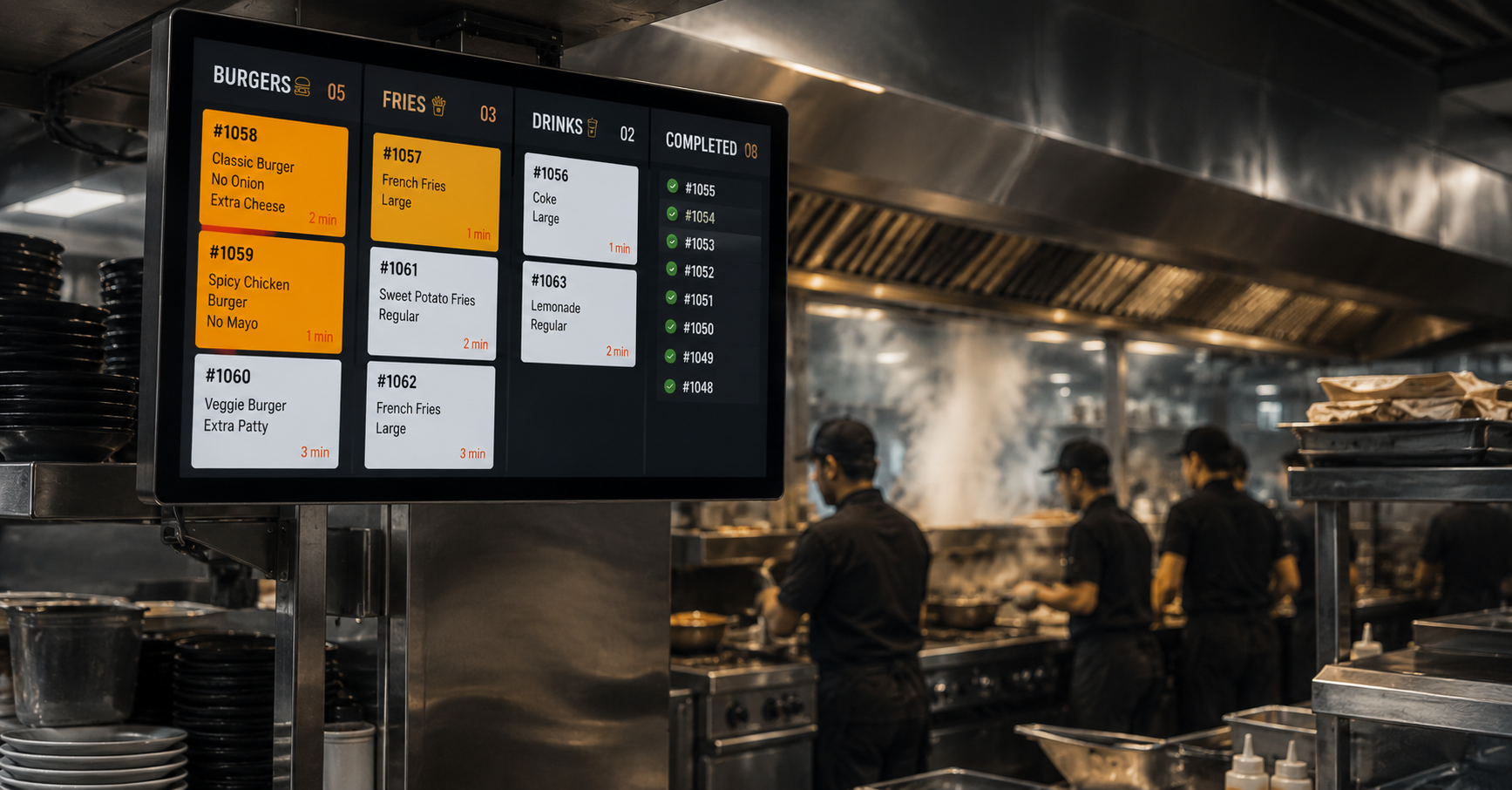
The Kitchen Display System: The Unsung Hero of Fast QSR Operations
Most conversations about QSR technology happen at the front of the house. Self-order kiosks, digital menu boards, loyalty apps, payment systems — all visible, all customer-facing, all easy to point to when discussing “digital transformation.” Almost nobody talks about what happens after the order is placed. This is a mistake. Because the single biggest determinant […]

How Retail Brands Are Using Digital Displays at the Point of Decision
The most important moment in retail isn’t when a customer walks through the door. It’s the three to five seconds when they’re standing in front of a product, deciding whether to pick it up. Everything before that moment — the advertising, the in-store navigation, the window display — has done its job. It got them […]
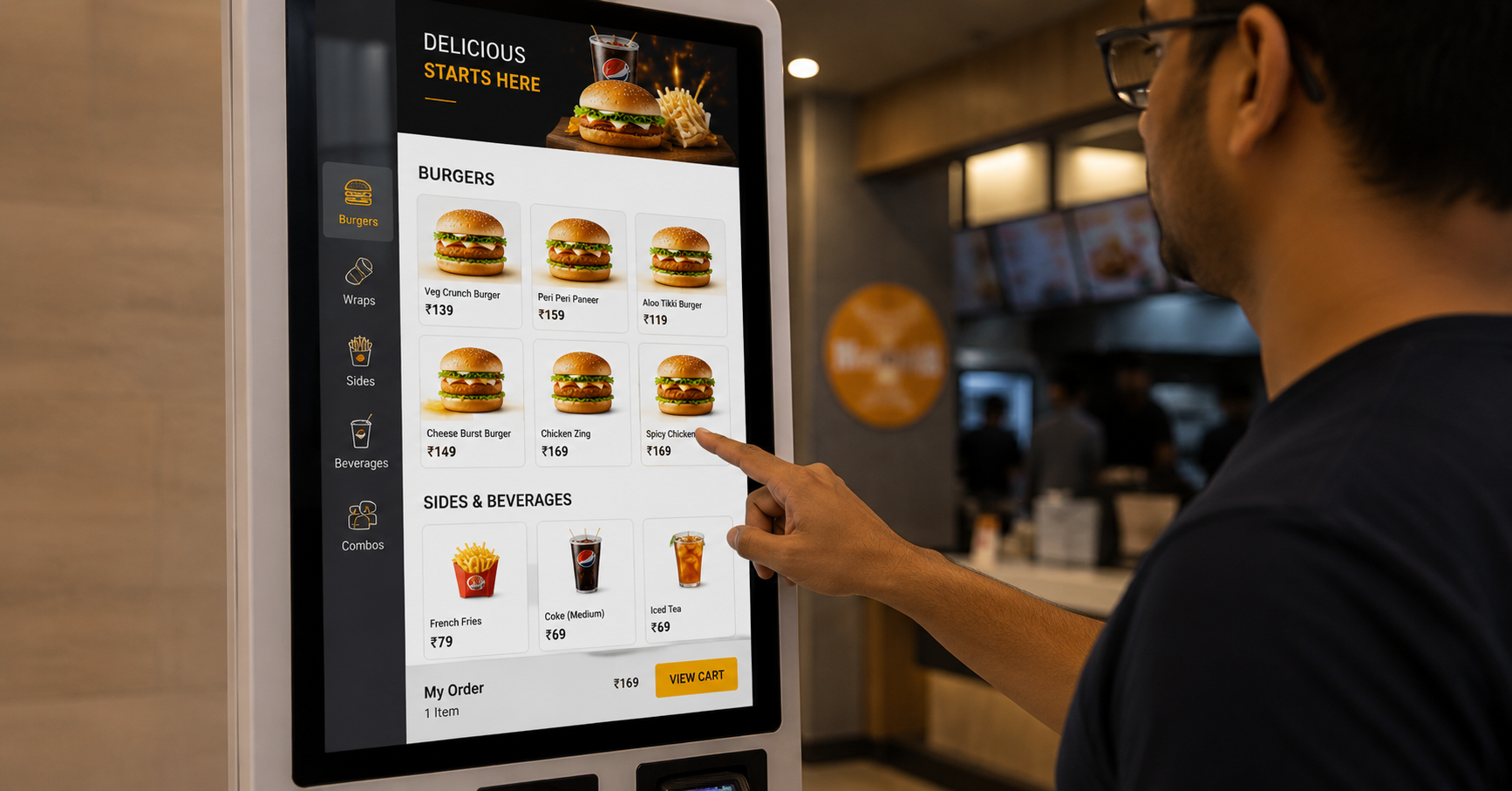
What to Ask Before Buying a Self-Order Kiosk in India?
The self-order kiosk market in India is growing fast. Walk into any organised QSR chain today and there’s a reasonable chance you’ll see a kiosk near the entrance — a touchscreen terminal where customers browse the menu, customise their order, and pay, without involving counter staff. For operators, the appeal is obvious: faster throughput, higher […]
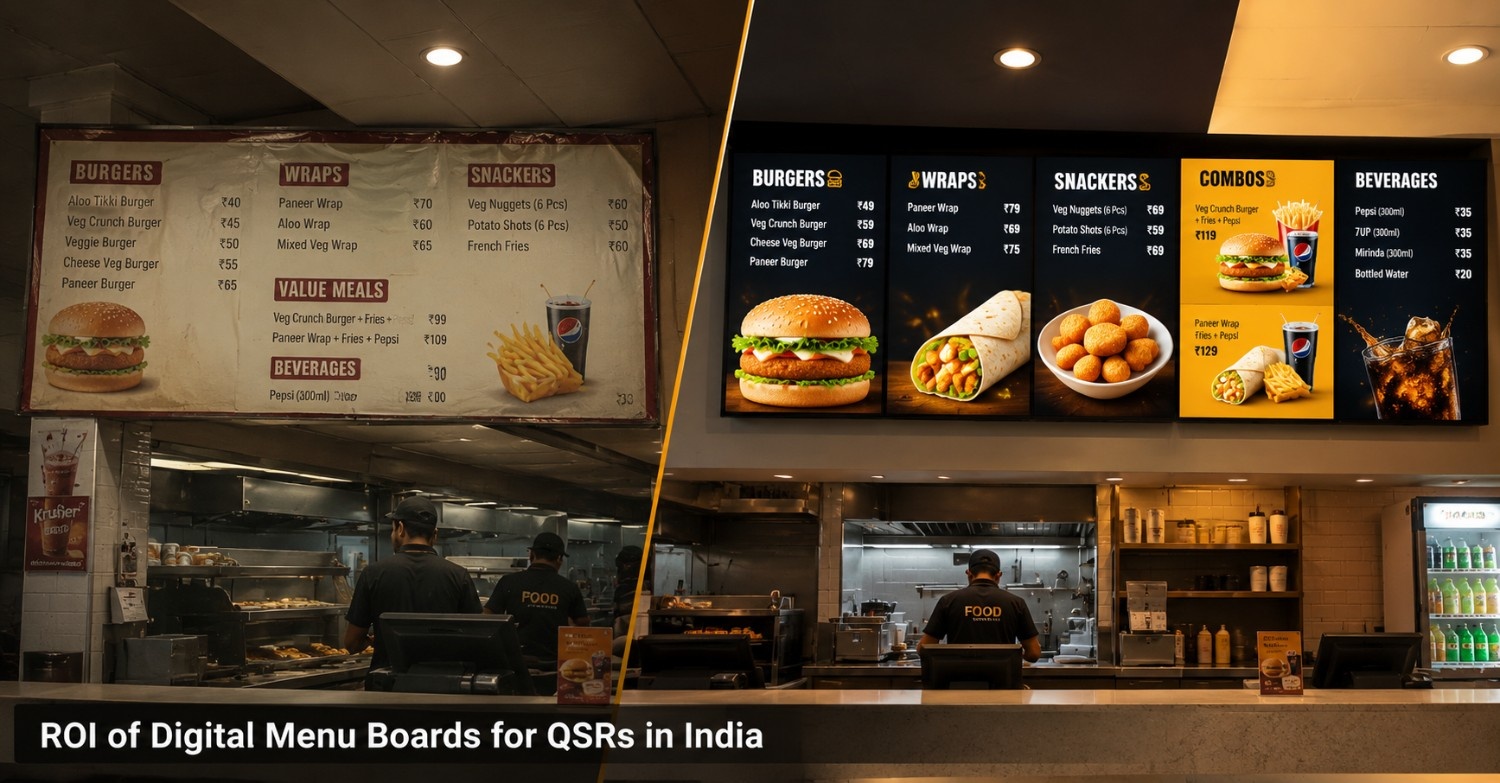
Digital Menu Boards vs. Static Boards: The Real ROI Calculation for Indian QSRs
Walk into any QSR in India today and you’ll notice one of two things behind the counter: a bright, animated digital menu board or a printed flex board that hasn’t changed since the last price revision. Both show you the menu. But only one of them is actually working for the business. The debate between […]
LCD Video Wall Matrix
Creating content for video walls can be more complex due to the variety of setups. Let’s examine a few common configurations: When working with video walls, there are two common scenarios:
Custom-Shaped LCD Screens
Creative projects may require custom-shaped screens with unique resolutions. Always confirm the resolution of the display before creating content to ensure it fits perfectly. Here are some examples:
Standalone LCD Screens (Horizontal Orientation)
These horizontal displays range in size from 10 to 110 inches and are typically in a 16:9 aspect ratio. The most common resolutions for these screens are: It’s rare to encounter screens with lower resolutions, but you might find some older displays with resolutions such as:
Standalone LCD Screens (Vertical Orientation)
In this category, there are two scenarios to consider: Rotated Horizontal Screens: These screens are originally designed for landscape orientation but are installed vertically. In this case, create your content in a 16:9 aspect ratio and then rotate it to match the screen’s orientation. Native Vertical Orientation: These screens are designed to be installed vertically. […]