Which Digital Display Solution Should I Choose for a Corporate Office Lobby?
A corporate office lobby is one of the highest-visibility locations in any organisation’s physical environment. It’s the first thing employees see every morning, the first impression every visitor forms, and often the space where a company’s culture, scale, and professionalism are communicated before anyone says a word.
Choosing the right digital display for this space is consequently more consequential than most procurement decisions of similar monetary value. The wrong format or the right format poorly deployed communicates the opposite of what was intended.
This guide covers the main options, what each format does well in a lobby context, and how to decide which is appropriate for a specific environment.
The Formats Worth Considering for a Corporate Lobby
Video Wall
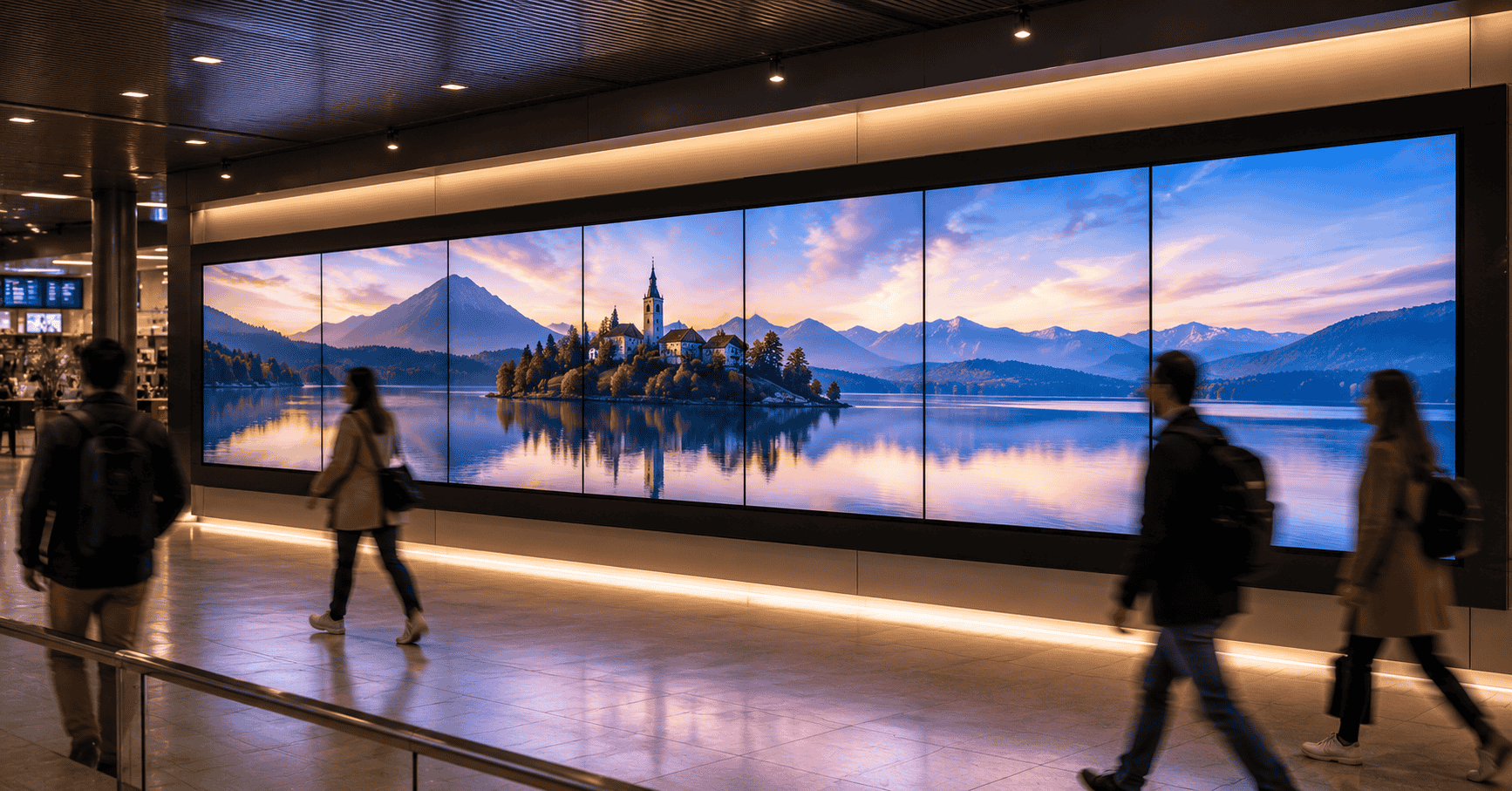
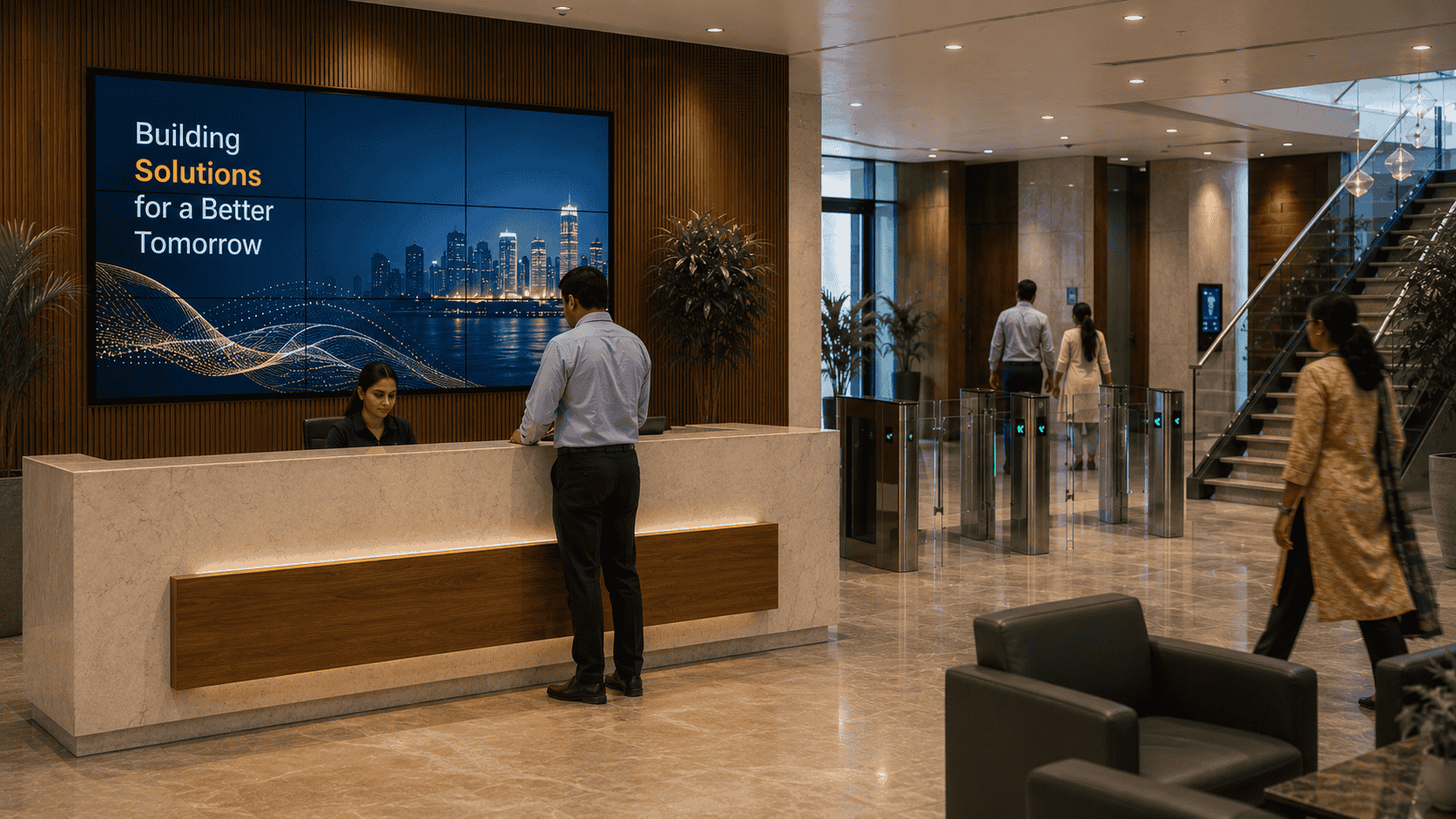
What it is: Multiple display panels tiled together to form a single large-format canvas, typically mounted flush on a feature wall often behind the reception desk or facing the main entrance.
What it does in a lobby: Creates a brand environment rather than just displaying content. A well-executed video wall defines the character of a space, it signals scale, investment, and visual ambition. For organisations where the physical environment is part of the brand statement, professional services firms, technology companies, financial institutions, headquarters of consumer-facing brands, a video wall delivers impact that no single-screen solution can match.
When it’s the right choice:
- The lobby is large enough that a single screen would look undersized relative to the space
- The organisation wants to create a genuine brand environment, not just display information
- There is a content strategy and team ownership in place to keep the wall active and current
- The budget accommodates both hardware and ongoing content investment
When to think twice:
- The lobby is small or proportionally constrained, a large video wall in a modest lobby looks overwhelming rather than impressive
- There is no clear content plan, a video wall running a looping brand film for twelve months is an expensive screensaver
Single Large-Format Display
What it is: A single commercial-grade screen, typically 65 to 98 inches, wall-mounted, often in the same positions a video wall might occupy.
What it does in a lobby: Delivers strong visual presence at a lower cost and complexity than a video wall. For medium-sized lobbies, a well-placed large-format single screen is frequently more appropriate than a multi-panel video wall, it’s easier to manage, simpler to service, and often more proportionate to the space.
When it’s the right choice:
- The lobby is medium-sized and a single large screen will fill the intended visual role adequately
- Budget constraints make a video wall impractical but the organisation still wants a high-quality display presence
- The content requirement is straightforward, brand communication, visitor welcome messages, company news, without the need for the panoramic format a video wall provides
When to think twice:
- The lobby has significant architectural scale that a single screen won’t adequately address
- The organisation is planning a significant size expansion and future-proofing for a larger installation makes sense
Transparent LED
What it is: LED display panels with significant open space between LED clusters, creating a see-through effect, typically mounted in or behind glass partitions or glazed architectural elements.
What it does in a lobby: For organisations with glass-walled reception areas, glazed partitions, or architectural glass features, transparent LED integrates display capability into the existing glass without blocking sight lines. Content plays on the glass while the space behind remains visible, preserving the openness and light that makes a glass lobby work architecturally.
When it’s the right choice:
- The lobby has prominent glass elements, a glass wall, a glazed atrium partition, a floor-to-ceiling window facing an internal space, where content capability would add significant value
- The organisation’s brand positioning is premium or architectural, and the display needs to feel like part of the building rather than placed in it
- There is budget for premium hardware and a content brief designed specifically for the transparent format
When to think twice:
- The lobby is primarily solid-wall construction, transparent LED needs glass to work as intended
- The background visible through the display is not visually considered, a transparent screen in front of a cluttered or arbitrary background defeats the format’s purpose
Digital Directory and Wayfinding Display
What it is: A dedicated display, interactive or non-interactive, showing building directory information, floor maps, and directional guidance. Typically positioned near the entrance or reception desk, sized for close-range reading.
What it does in a lobby: Solves the navigation problem for visitors, new employees, and delivery staff. In buildings with multiple floors, departments, or tenants, a digital directory reduces the volume of navigation queries handled by reception staff and gives visitors confidence and independence from the moment they arrive.
When it’s the right choice:
- The building has multiple floors, departments, or tenants that visitors regularly need to navigate
- Reception staff are frequently handling navigation queries that a self-service directory could address
- The organisation wants to communicate operational sophistication as part of the visitor experience
When to think twice:
- The building is a single-tenant, single-floor space with obvious navigation, a directory adds complexity without solving a real problem
- Interactive hardware is appropriate only if the content is kept current, a directory with outdated department listings is worse than no directory at all
Welcome and Visitor Communication Display
What it is: A mid-format screen, typically 43 to 65 inches, positioned to face arriving visitors, showing a welcome message, visitor instructions, building rules, or brand communication.
What it does in a lobby: Manages the visitor experience during the brief waiting period between arrival and being received, typically 2 to 10 minutes. Content can include a personalised welcome for expected visitors (when integrated with a visitor management system), general brand communication, building information, and safety or security instructions.
When it’s the right choice:
- The lobby regularly receives external visitors, clients, candidates, partners, for whom a considered welcome experience is relevant
- There is a visitor management system in use that can feed scheduled visitor data to the display for personalised welcome messages
- The organisation wants to use waiting time productively without installing a full video wall
When to think twice:
- The lobby is primarily an employee-only space with minimal external visitor traffic, the format’s core value is visitor experience
The Combination That Works for Most Corporate Lobbies
Most corporate lobby deployments benefit from two or three complementary display elements rather than a single format attempting to do everything:
For a headquarters or flagship office: A video wall or large-format screen as the primary brand environment display, combined with a digital directory for wayfinding and a visitor welcome display near the reception desk. Each element does a specific job; together they cover the full range of lobby communication requirements.
For a mid-sized regional or branch office: A single large-format screen for brand and communication, combined with a digital directory if the building warrants it. Simpler, more cost-appropriate, and fully manageable by a small internal team.
For a premium or architecturally distinctive lobby: Transparent LED integrated into existing glass features, paired with a visitor welcome display and directory. Appropriate where the architectural investment of the space is significant enough to justify matching-quality display infrastructure.
The Questions Worth Answering Before Specifying
What is the lobby’s primary audience, visitors, employees, or both? Visitor-primary lobbies prioritise first-impression impact and wayfinding. Employee-primary lobbies benefit more from dynamic communication displays showing company news, recognitions, and operational updates.
What is the content strategy? A video wall with no content plan is an expensive screensaver. Before specifying hardware, the organisation should have a clear answer to: who manages content, how often it changes, and what it will show eighteen months from now.
What is the available wall space and proportional scale? The display should be proportionate to the space. An undersized screen in a large lobby looks like an afterthought; an oversized installation in a small lobby feels oppressive. A site assessment before specification is not optional.
What is the service and maintenance model? A display that goes dark in the reception area of a professional services firm on a morning when a major client is visiting is a reputational problem. The support SLA for a lobby installation should reflect the visibility and sensitivity of the location.
If you’re specifying a digital display for a corporate lobby, whether a single screen or a multi-format installation, and want to work through which format is appropriate for your specific space, we’d be glad to advise.
Get in touch: contact@techworksworld.com | +91-99109 65918 | techworksworld.com